Presenter: Dorothy Colby, Hale Kū‘ike Director of Community Engagement & Positive Approach to Care® Trainer

Date: 3/30/2022

Recording length: 1 hour, 15 minutes

Sponsors: Hale Kū‘ike and Catholic Charities Hawai‘i

Session:

  • Why do we keep arguing? Why can’t he find the bathroom? Why does she sleep all day? We find ourselves in challenging situations like these in dementia care every day.
  • How can we take a step back and become curious, non-judgmental dementia detectives to find out why these challenging situations keep happening?
  • We can learn how to be more effective and helpful in challenging situations by focusing our energy on the elements we CAN change vs. those we CANNOT

Uh-oh, that didn’t go the way I wanted it to! Uh-oh moments happen to us a lot when we are trying to support someone living with dementia. We are trying our best to give loving care, but still we find ourselves in endless arguments and stuck looking for solutions our challenges. If we can step back from these situations and look at them with curiosity and without judgement, we can learn from the experience. We want to turn these Uh-oh’s into Ah-ha’s

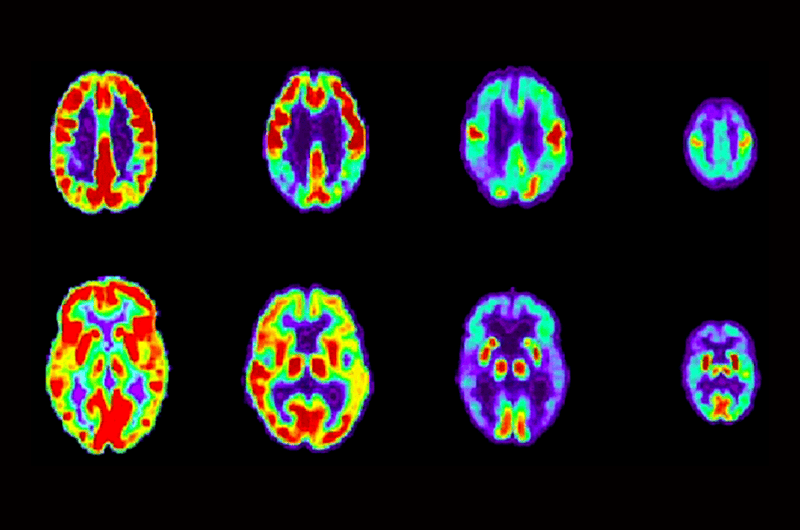
When we become dementia detectives, we learn about the brain changes that come with dementia so can start to understand the difference in how someone living with dementia perceives and interpret the world around them, including us, their care partners. We figure out how why loving offers of help might be interpreted as a threat to a changing brain. We work to see the environment through their eyes and understand why it might not be as easy to navigate as we think it is. The Positive Approach to Care®’s Six Pieces of the Puzzle tool can help us to look at all the factors that affect a person, and figuring out where we can make positive changes to help mitigate or prevent challenging situations.

Challenging Situation 001

Each of us as human beings is unique, with a unique personal history. We each have unique personal health and brain health statuses. These are the first three pieces of the puzzle that influence how we experience the world — The Person, Fitness/Health/Wellness, and Brain Change. Looking at these three pieces of the puzzle for yourself, which ones do you have influence to make positive changes? When we are young enough, the one we can make the most positive impact on the Fitness/Health/Wellness piece of the puzzle. Time is on our side.

Now thinking about those who are living with dementia, especially those who are elderly, how much influence do we have on these first three pieces of the puzzle? Who they have been does not change, though how that expresses itself may be different with brain change. We do not have as much influence over their Fitness/Health/Wellness piece as before. In general, because of advancing age and dementia, the person’s health goal has shifted curative measures to maintenance. We just want to try to have things not get worse, if we can help it. That third piece of the puzzle, Brain Change, is an important one to understand so that we can give better support. However, at this point in time, we cannot turn back the clock on dementia-related brain change.

The next three pieces of the puzzle are where we can focus our energy to make positive change — Stakeholders, Environment and Time. Everyone that touches a person living with dementia’s life is a stakeholder. You, other relatives, neighbors, the mail carrier, bus driver, healthcare professionals, they all influence how the person living with dementia experiences and responds to the world. The environment plays a big role in how successfully a person living with dementia moves through the world. Environments need to be friendly, familiar and forgiving of mistakes. The last piece of the puzzle is Time, how a person spends the hours of their day. Every person, whether they are living with dementia or not, needs meaningful engagement every day.

To learn more about challenging situations and how to move the needle on the Stakeholders, Environment and Time pieces of the puzzle, you can view our recorded webinar, “Challenging Situations in Dementia Care: Putting Together the Pieces of the Puzzle.” You can also download the workshop slide deck, GEMS printable poster, and PAC Resource Cards.

For more information about PAC, visit www.teepasnow.com.
Presenter: Dorothy Colby, Hale Kū‘ike Director of Community Engagement & Positive Approach to Care® Trainer

Date: 3/16/22

Recording length: 1 hour

Sponsors: Hale Kū‘ike and Catholic Charities Hawai‘i

Description:

  • TV, bingo, napping…what else is possible when so many skills are lost?
  • How can we help those we love living with dementia find purpose and meaning in in their day?
  • How do we find moments of joy for ourselves as care partners while supporting someone living with dementia?

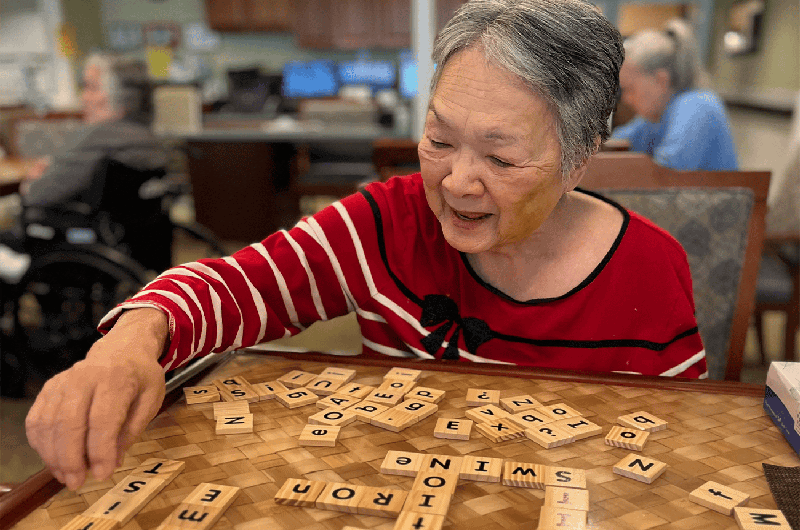
In our daily lives we all have four types of activities that fill our days — purposeful, leisure, self-care, and rest/restorative activities. As human beings we need to find a balance of all four to be healthy and feel happiness. When that balance is off, all work and no self-care for example, it can negatively affect our physical and mental health. To feel joy and to feel needed are vital to mental health. Without them we cannot thrive.

People who are living with dementia are no different. They also need to feel a sense of purpose, engage in leisure, be involved in self-care, and rest and recharge their batteries. The brain changes that come with dementia make it increasingly difficult to initiate and participate in activities that they once enjoyed.

As care partners, both at home and in long-term care, the focus tends to be on self-care and restorative activities. We are very good at making sure all the personal care needs are met (meals, bathroom, medications, etc.) and that they get sleep. It can be a challenge to plan and fit in activities that provide leisure fun and a sense of purpose, especially for an already exhausted care partner.

With advance planning and assembling a support team of family and/or professionals, it is possible to help those we care for be engaged with life and find moments of joy. Increasing opportunities for meaningful engagement starts with getting to know the person so that you can tailor activities that are interesting, do-able, and valued by the person who is experiencing so many changes due to dementia. Designing daily routines, but staying flexible, is key as well. Meaningful engagement makes a positive difference for mental health and wellbeing of the person living with dementia and their care partners.

There are two Positive Approach to Care® (PAC) tools that can help in this planning immensely — the GEMS brain change model and the Six Pieces of the Puzzle. The GEMS can help with understanding what abilities are retained throughout the dementia journey. We can then adapt activities to match what skills a person still has for success and joy. The Six Pieces of the Puzzle can help with looking at all the factors that affect a person and figuring out where we can make positive changes. We can figure out what adjustments or changes can we make to the environment, stakeholders (those around them), and how their time during the day.

To learn more about meaningful engagement for people living with dementia, you can view our recorded webinar, “Activities in Dementia Care: Filling the Day with Meaningful Engagement.” You can also download the workshop slide deck, GEMS printable poster, and the PAC Resource Cards.

For more information about PAC, visit www.teepasnow.com.

Presenter: Dorothy Colby, Hale Kū‘ike Director of Community Engagement & Positive Approach to Care® Trainer

Date: 11/12/20

Recording length: 1 hour

Sponsors: Hale Kū‘ike and Catholic Charities Hawai‘i

Description:

  • Won’t eat, won’t stop eating, won’t drink, only wants to eat sweets! These are some of the very common challenges for people living with dementia.
  • How can we take the struggle out of dining and bring back the joy?
  • What changes can we make to the food and overall dining experience to help better support people living with dementia throughout their journey?

Dining is a full sensory experience that we all get to enjoy multiple times a day. It is the source of some of our most powerful memories. Think back, what is one thing from your childhood that you really loved to eat? Picture who made it for you and think of when you got to have it. Maybe it was the crispy lumpia your mother made for you to have on your birthday. Maybe it was a mango from the tree at your grandfather’s house. If you close your eyes, you can almost smell and taste it. You can see the person who made it for you. Was that food sweet, salty, fatty, or crunchy? Those are elemental flavors that our brains love from when we are very young and stay with us as we age.

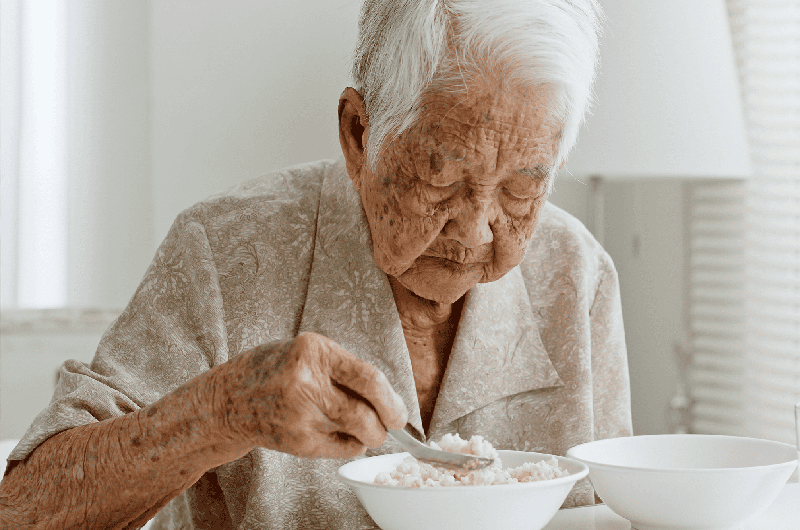
People who are living with dementia also retain the love of familiar foods, flavors and aromas. Foods that are lifetime personal favorites, that are familiar and look and smell good, are what are preferred. The brain changes that come with dementia can impact vision, fine motor hand skills, chewing, swallowing, hunger and thirst, and taste perception. When we can pair the understanding of a person’s dementia brain changes and their individual familiar favorites, we can make positive changes to better support nutrition and hydration.

Dehydration is a very common challenge for people living with dementia. Lack of thirst, or awareness of thirst, and fear of incontinence are a few of the possible contributing factors. Some people will simply not drink plain water, no matter how much you want them to. Flavoring water with a bit of juice or other flavorings can help. Foods that have high fluid content are great sources of water — soups, Jello, fruits, vegetables.

As dementia progresses a person may start to lose the find motor skill to use utensils. There are special adaptive utensils that require less skill. Food can be changed to finger food for independent eating. Challenges swallowing, dysphagia, is also very common. If you notice coughing when eating or drinking, a Speech Therapy swallow evaluation can help determine what food texture and liquid thickness modification might be better. But remember, just because food is chopped or pureed, doesn’t mean it still can’t be delicious and enjoyable!

As dementia progresses, a person gets a kind of tunnel vision. Their field of active vision becomes very narrow, almost as if they are wearing binoculars. When they are focused looking down at their plate, they are visually unaware of things and people around them. They are using what is called “task vision” to focus on the meal at hand. If they are looking up at a person, or perhaps the TV in the dining room, they are using their “social vision,” and are visually unaware of what is on the table right in front of them. With a slowing brain it becomes harder and harder to switch between social and task vision. Reducing visual and auditory distractions in the dining area to allow a person to completely focus on their food as they eat. Replacing the TV with quiet or perhaps soothing background music, can really help a person living with dementia focus on their food.

As a person nears the end of their lives, the body functions start to shut down. They will spend more time sleeping or with their eyes closed. They will not have an appetite for food or drink and may refuse to eat altogether. If they do eat, they may not be able to swallow effectively at all, instead aspirating any food or drink given into their lungs. Their bodies have limited ability to fight infections and they will be prone to pneumonia and UTIs.

At this precious time at the end of life, we want to have peaceful smells, sights and sounds. We can gently offer food, but if someone is not alert or refuses, that is a sign for us to stop, love the person and let them know we understand. At this point in life food is about little tastes, not nourishment or hydration. Maybe a little bit of pureed mango on my tongue, just like the one I enjoyed from grandpa’s tree as a child, can be a small moment of pleasure and joy. The most important thing at this time is our presence and relationship, not getting food in and getting the meal done.

To learn more about dining with dementia and more nutrition and hydration tips, you can view our recorded webinar, “Dining with Dementia: Techniques to Bring Joy to the Table.” You can also download the workshop slide deck, GEMS printable poster, PAC Resource Cards, and articles about dining with dementia by Teepa Snow and Dorothy Colby.

For more information about PAC, visit www.teepasnow.com.

Presenter: Dorothy Colby, Hale Kū‘ike Director of Community Engagement & Positive Approach to Care® Trainer

Date: 11/5/20

Recording length: 1 hour, 30 minutes

Sponsors: Hale Kū‘ike and Catholic Charities Hawai‘i

Description:

  • Why is dementia different as the end of life’s journey approaches?
  • Letting go vs. giving up…what is the difference?
  • How to make positive connections all the way to the end of life

The journey of dementia is ever changing, and that holds true all the way through the end of life. One of things that can be very different than other disease processes is that it may have taken a very long time to reach this point, possibly more than a decade. So much has changed for the person living with dementia, and for everyone in their lives.

As we all move through life we experience all kinds of health care. We try to promote better health through exercise and other lifestyle changes. When we are sick or injured, we seek treatment for a cure and hopefully a complete recovery. Sometimes we need rehab to help us restore some of our skills or abilities. We might not get back to exactly where we were before, but we make improvements. As time goes on our focus changes to trying not to lose ground, keep our health status quo. We add in physical and environmental supports, such as walkers, to help compensate for challenges.

Over time journey of dementia these health care approaches can become challenging or ineffective. We can’t fix or change the course of the diseases that cause dementia, no matter how hard we might try. But even though there is no cure, there is a type of care that can help improve the quality of life for the person, and everyone in their lives. That care is comfort care, which can take the form of palliative care or hospice care. Palliative care is specialized medical care for people living with serious illnesses like dementia. The focus is on comfort and improving the person’s quality of life. Palliative care is available at any stage of the illness, and you can have it with other treatments. Hospice care focuses on comfort and dignity at the end of life. The primary purpose it to manage pain and other symptoms during the last six months of life.

In the Positive Approach to Care® (PAC) GEMS progression model, the late stage of dementia is the Pearl. Like an oyster, the person living in a Pearl state is hidden in their shell. They may be still, quiet and withdrawn. Movement becomes challenging and they may be stiff or contracted. Infections, such as UTIs, are common. Primitive reflexes take over and they may have difficulty swallowing.

Even though they may seem locked away in their shell, the person you know and love is still there. The end of life’s journey is approaching. They may need our permission to go, to know that they have done what they needed to do here and we will be OK. We can still connect with smooth and slow movements and a low and calm voice. With the right setting and care, it is possible for that shell to open for brief moments of connection.

To learn more about dementia and end-of-life care tips, you can view our recorded webinar, “End of Life Care & Letting Go: Providing Care in the Final Stages of Dementia.” You can also download the workshop slide deck, GEMS printable poster, and PAC Resource Cards.

For more information about PAC, visit www.teepasnow.com.
Presenter: Dorothy Colby, Hale Kū‘ike Director of Community Engagement & Positive Approach to Care® Trainer

Date: 10/15/20

Recording length: 1 hour, 15 minutes

Sponsors: Hale Kū‘ike and Catholic Charities Hawai‘i

Description:

  • Challenging behaviors, why are they happening?
  • When these challenges arise, what can make it better or worse?
  • It takes two to tango, or to tangle. How can we learn to dance with our partner for a better outcome for both of us?

If you were to ask someone to make a list of challenging dementia behaviors it would be long — repeated questions, paranoia, wandering, using “bad” words, resisting or refusing care, losing important things, and many more. If we look at the brain changes cause by dementia, we can start to understand the difference in how they perceive and interpret the world around them, including us, their care partners. We then can start to understand how our loving offers of help might be interpreted as a threat to a changing brain and these challenging situations occur.

These challenges are not just for the person living with dementia, they are challenges for everyone around them too. We are facing a challenging situation together. If we can take a step back and look at all the pieces of the puzzle that have led up to this challenge, we can learn and make changes to help make it better, or perhaps prevent it in the future. We can learn to be good, non-judgmental dementia detectives.

As detectives we need to examine our human physical needs — the need to eat and drink, to expend or recharge our energy, eliminate waste, be comfortable and free of pain. We need to look for signs of basic human emotional distress — anger, sadness, loneliness, fear and boredom. When any these needs are not met, whether we are living with dementia or not, we experience challenging situations and distress.

We can use the Positive Approach to Care® GEMS brain change model and the Six Pieces of the Puzzle to help us with our detective work. The GEMS can help with understanding what abilities change throughout the dementia journey and how we can adjust to them. The Six Pieces of the Puzzle can help with looking at all the factors that affect a person and figuring out where we can make positive changes to help mitigate or prevent challenging situations.

To learn more about challenging situations for people living with dementia, you can view our recorded webinar, “Challenging Behaviors: Recognizing Unmet Needs.” You can also download the workshop slide deck, GEMS printable poster, and the PAC Resource Cards.

For more information about PAC, visit www.teepasnow.com.

Presenter: Dorothy Colby, Hale Kū‘ike Director of Community Engagement & Positive Approach to Care® Trainer

Date: 10/1/20

Recording length: 1 hour

Sponsors: Hale Kū‘ike and Catholic Charities Hawai‘i

Description:

  • Dementia changes the sensory input systems. What does the world look, sound and feel like for someone living with dementia?
  • Visual, verbal and touch processing are all affected. How can we get connected despite these changes?
  • How can we become “care partners” instead of “care givers” in this dementia journey?

When we think about dementia changes, the focus is typically on memory changes. In fact, the entire brain and all its functions are affected by the diseases that cause dementia, not just the memory center. If we want to have effective communication and meaningful connections with someone living with dementia, we need to understand how other brain functions are affected.

As human beings, we want to see what is coming to feel safe. If there is a sound outside our vision, we turn and look. If we feel a touch we didn’t expect, we turn and look. When we are taken by surprise by something we see, hear or a touch, our fight-fright-flight response kicks in. Once we determine it is not a threat, then we can quickly start to relax and return to our calm baseline.

People living with dementia are no different. If they are taken by surprise, their fight-fright-flight response also kicks in, but because of their brain changes, it is much more challenging for them to process if something is not a threat and return to a calm state. If we do not want to kick off that fight-fright-flight response, we need to make sure we get a visual connection first before coming in to talk or touch.

The occipital lobe of the brain processes what we see in the world. We have a central field of active vision, and a wide peripheral awareness that is our safety vision. With all dementias, peripheral awareness narrows drastically, leaving a very narrow tunnel of active vision. The person simply is unaware of activity and objects outside that tunnel. It can be like looking at the world through a pair of binoculars. This often leads to trip and fall hazards and getting surprised by care partners touches.

The temporal lobes that process language are also affected. You might notice that a person living with dementia has trouble finding words or forming coherent sentences. This is paired with a change in comprehension. We talk and the person living with dementia hears us, but they cannot understand the content of your speech. Rhythm and musical abilities are preserved. So even though someone might not be able to speak, they can sing the words of old songs, prayers or poems they knew when they were young.

The Positive Physical Approach™ (PPA) and Hand Under Hand™ (HUH) techniques help us get connected in positive way. Their simple steps keep us in a person living with dementia’s narrow field of active vision, help us adjust our language to their changing language skills, and to get permission before touching. It is a dynamic assessment tool that allows us to build our relationship with the person we are trying to support, so that we can be “care partners” in everything we do. It helps us do “with” instead of “to” a person.

To learn more about dementia-related sensory changes, PPA, HUH and communication techniques, you can view our recorded webinar, “It’s All in Your Approach — Making Positive Connections.” You can also download the workshop slide deck and PAC Resource Cards.

For more information about PAC, visit www.teepasnow.com.

Presenter: Dorothy Colby, Hale Kū‘ike Director of Community Engagement & Positive Approach to Care® Trainer

Date: 9/10/20

Recording length: 1 hour

Sponsors: Hale Kū‘ike and Catholic Charities Hawai‘i

Description:

  • The only constant in dementia is that it is ever changing. How does it progress?
  • How can we connect with what abilities remain, and not just focus on the loss?
  • How can we adjust our care, support, and expectations throughout our journey of living with dementia?

When we think about dementia, we often first think of all the lost abilities — memory, language, judgement, motor skills, and more. Commonly used dementia progression scales, such as the Global Deterioration Scale, are very good at documenting the losses and rating the person at a level of increasing incompetence. The grading system on these scales are either numeric (1–7, 1–3, etc.) or comparative (mild, moderate, severe, etc.). What these scales do not do, is measure what abilities remain throughout the dementia progression. They do not recognize that people living with dementia can still live a rewarding life all through their journey.

The GEMS brain changes model developed by Teepa Snow is based on the Allen Cognitive Scale. Unlike traditional models, the GEMS focuses on the skills and abilities a person still has, not what they have lost. Instead of looking at people as less, care partners can learn to see what the person living with dementia still has left and is still able to do.

The GEMS model recognizes six brain states, each a unique and precious gem. Our healthy normal aging brains are included in the GEMS model. We are the Sapphires who can be flexible and think things through and support all the other GEMS.

GEMS
  • Sapphires: True Blue — Slower BUT Fine
  • Diamonds: Repeats and Routines — Cutting
  • Emeralds: Going — Time Travel —Where?
  • Ambers: In the moment — Sensations
  • Rubies: Stop and Go — No Fine Control
  • Pearls: Hidden in a Shell — Immobile

The GEMS model can help us understand about what it means to be living in a world with Sapphire, Diamond, Emerald, Amber, Ruby, or Pearl cognitive and physical abilities. All individuals, whatever their state of being, in the right setting and with the right care, can shine!

To learn more about dementia progression patterns, GEMS™ and the Positive Approach to Care®, you can view our recorded webinar, “GEMS™, More Than Just Loss — Dementia Progression Patterns.” You can also download the workshop slide deck, GEMS printable poster, and PAC Resource Cards.

For more information about PAC, visit www.teepasnow.com.

Presenter: Dorothy Colby, Hale Kū‘ike Director of Community Engagement & Positive Approach to Care® Trainer

Date: 9/3/20

Recording length: 1 hour

Sponsors: Hale Kū‘ike and Catholic Charities Hawai‘i

Description:

  • You are noticing brain changes in someone you are caring for, is it dementia?
  • What does normal healthy brain aging look like?
  • How can we better connect with and support those we care for who are living with dementia?

As we age, we all experience physical changes, including changes to our brains. With normal healthy aging, it may take us a bit longer to remember a name or to learn a new skill. Normal aging means slowing down a bit, NOT losing function!

Dementia is NOT a part of normal healthy aging. Dementia is the umbrella term for a group of symptoms caused by diseases or brain damage. It generally includes a loss of memory, problem-solving, language and other cognitive skills that are severe enough to interfere with daily living and independent life. There are over 50 different diseases that can cause dementia. The most common are Alzheimer’s Disease, vascular dementia (strokes), Lewy Body dementia, Frontotemporal dementia, Parkinson’s Disease, and alcoholism. All the dementia-causing diseases damage brain cells, cause brain shrinkage, and lead to a loss of brain wiring. The entire brain is affected, not just the memory center. These brain changes are irreversible, progressive, and eventually terminal.

While there may be no cure for dementia, there are care techniques and approaches that can make a positive difference for the person living with dementia, and their care partners. Using the Positive Approach to Care® (PAC) philosophy and techniques can make it possible for someone to live well with dementia.

If we can understand the brain changes that come with dementia, we can come as close as possible to seeing the world through their eyes and understand the challenges of living with dementia. We can understand and focus on what skills remain, not just what is lost. PAC skills can help us change our impulsive reactions into thoughtful responses that improve everyone’s quality of life.

People who are living with dementia are doing the best they can every moment of the day. We need to remember which one of us in this relationship has the healthy aging brain! We are the ones who can be flexible, learn new skills, and build a support team for ourselves and the person we love.

To learn more about normal aging, dementia and PAC skills, you can view our recorded webinar, “Normal vs. Not Normal Aging — Understanding the Difference. You can also download the workshop slide deck and PAC Resource Cards.

For more information about PAC, visit www.teepasnow.com.